


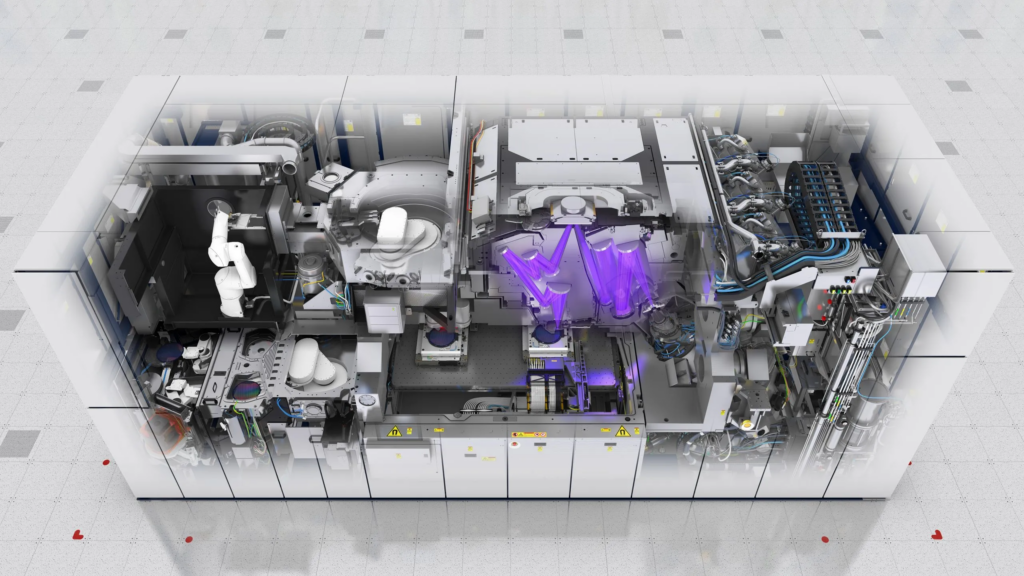
In a major development in the global semiconductor race, China has reportedly built a prototype extreme ultraviolet (EUV) lithography machine — the critical tool used to manufacture the world’s most advanced chips. Until now, Dutch firm ASML was considered the sole company capable of producing fully operational EUV systems, which are essential for cutting‑edge semiconductors used in AI, smartphones, and high‑performance computing.
The prototype, assembled in a high‑security Shenzhen laboratory, was reportedly constructed with the help of former ASML engineers, who are said to have reverse‑engineered key components under strict secrecy. Sources familiar with the project described it as a state‑led effort likened to a “Manhattan Project” for semiconductor independence.
China’s machine can generate EUV light — the first step in chipmaking — but has not yet produced functional chips. Officials involved in the effort have set ambitious goals for domestic chip production, targeting 2028 as a potential timeline for workable output, though some analysts suggest 2030 is more realistic given the remaining technical hurdles.
These developments come as Beijing seeks to end reliance on Western suppliers and remove the United States from its semiconductor supply chains entirely. ASML’s systems currently cost around $250 million each and are critical for manufacturing advanced processors designed by major global companies.
If successful, China’s EUV capability could reshape the global tech landscape by weakening Western export controls and reducing dependency on imported chipmaking equipment.













